
2009: Code Began to Grow in the Public Square
The 2008 article was about mobile platforms. By 2009, another change was becoming clear: the way programmers collaborated was changing.
GitHub launched in 2008, but for many developers, the real awareness came gradually in the following years. It was not the first code-hosting site, nor the first version-control tool. SourceForge, Google Code, SVN, CVS, mailing lists, and Bugzilla all existed before it.
What made GitHub special was that it turned code collaboration into something lighter, more visible, and easier to participate in as a daily habit.
Contributing to Open Source Used to Have a High Threshold
Early open-source collaboration had a strong community flavor.
You needed to know where the project lived. You subscribed to the mailing list. You read long discussions. You generated patches according to project conventions. You learned the maintainer’s temperament. You also switched between different tools. Many projects were highly professional, but they were not friendly to newcomers.
That style worked for strong technical communities. It did not work as well for absorbing ordinary developers at large scale.
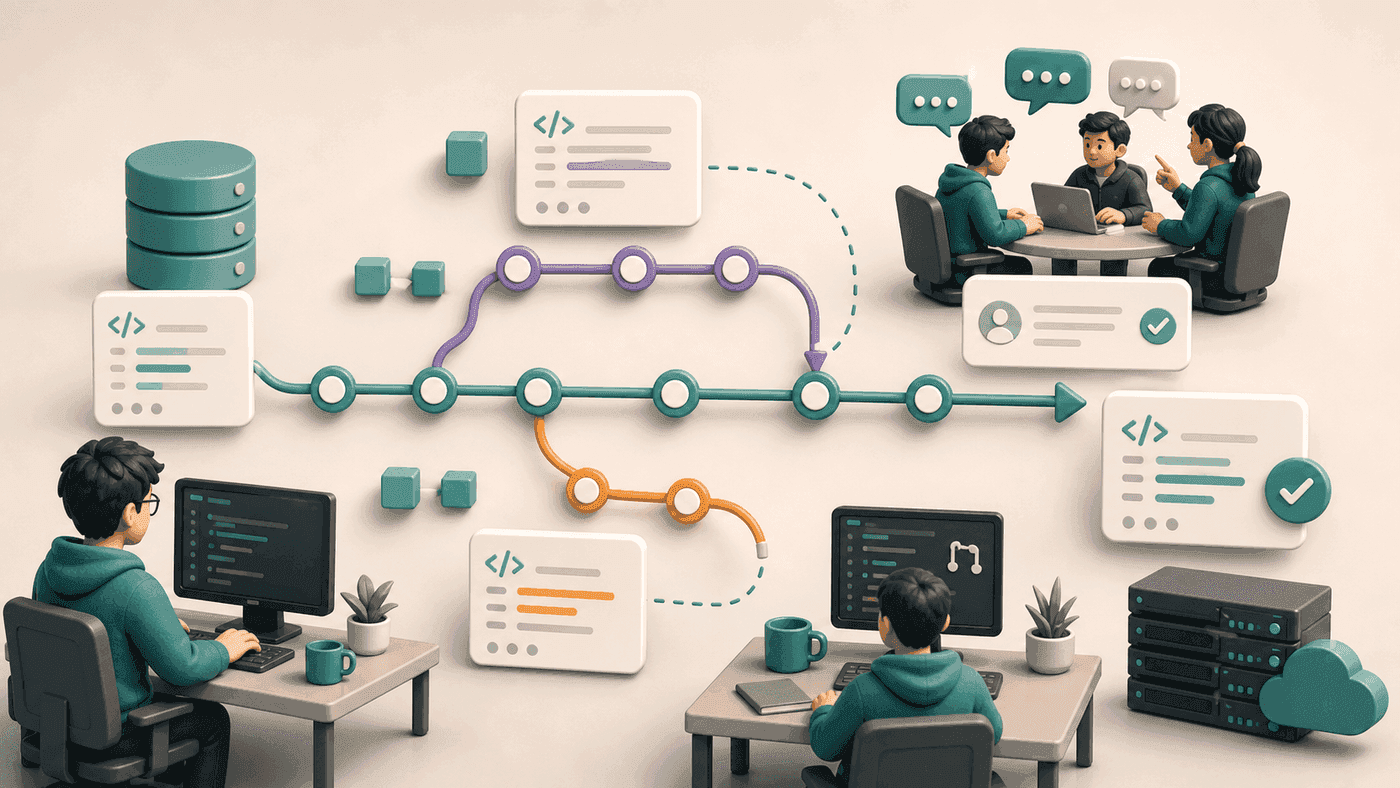
The combination of Git and GitHub changed a lot of that. Fork, branch, commit, pull request, issue, and review placed actions that used to be scattered across email, patches, code repositories, and project homepages into one continuous interface.
More importantly, collaboration became visible.
Who changed the code, who raised an issue, who joined a discussion, who maintained the project, and who kept contributing could all be seen. Code was no longer only a compressed archive, a patch, or a version number. It became a public object with history, relationships, and reputation.
This also affected the professional identity of programmers. In the past, saying what you could do depended more on resumes and interviews. Later, a person’s public code, issue discussions, and project-maintenance history could also become part of their proof of ability.
Open Source Moved From Ideal to Infrastructure
After spending many years in Linux companies, I was certainly no stranger to open source.
In earlier years, conversations about open source often revolved around licenses, free software, commercial distributions, community ethics, the Linux desktop, and domestic operating systems. Those discussions mattered. But around 2009, I increasingly felt that open source was undergoing another change: it was no longer only the position of one camp. It was becoming infrastructure for the software industry.
Programming languages, frameworks, databases, build tools, testing tools, deployment tools, and monitoring systems were increasingly built from open-source components. A company could choose not to open-source its business code, but it was becoming difficult not to use open-source components.
Open source was no longer maintained only by a small group of idealists. Large companies, startups, individual developers, research institutions, and cloud vendors all began to occupy their own positions in it.
That naturally introduced new tensions. Who maintains open-source projects? Who is responsible for security vulnerabilities? How much value do cloud vendors capture? How should communities and commercial companies divide responsibilities? These questions would become sharper in later years. But from an engineering-efficiency perspective, open source had become impossible to bypass.
Weibo Appeared, and Information Entered the Square Too
Another event in 2009 would later have a deep connection with my career path: Sina Weibo launched.
At the time, many people understood Weibo as a Chinese Twitter, but its later form was not merely a copy of Twitter. It had media attributes, celebrity accounts, public hotspots, public discussion, and social relationships. For the Chinese internet, Weibo changed both the speed and structure of information distribution.
On the surface, this had nothing to do with GitHub. But viewed together, the two changes are interesting.
GitHub made code collaboration into a visible network. Weibo made information distribution into a visible network. One changed programmer collaboration. The other changed public information flows. Both showed that the internet was not merely moving content online. It was reshaping how people connected with one another.
Several years later, I would join Weibo and work on its big-data platform and later Weibo Toutiao. Looking back at 2009, it feels like seeing the starting point of a track. Of course, I did not know then that I would go there. I only saw a new product growing quickly.
My Linux Company Years Were Nearing Their End
Around 2009, my years at Linux companies were also approaching their end.
During those years, I had worked across scripting languages, web development, file systems, synchronization, snapshots, C++ frameworks, GTK management software, and cluster management. I had seen the excitement around Linux distributions, the tension between free software and commercial companies, and the lack of freedom faced by system-software companies when markets and political boundaries collided.
Those experiences mattered, but the industry’s center of gravity was shifting.
Internet companies were starting to need large amounts of systems capability: search, advertising, recommendation, distributed storage, data platforms, high-concurrency services, log analysis, monitoring, and alerting. System-software engineers did not necessarily belong only inside operating-system companies. They could also move into internet infrastructure.
The next year, I would join Baidu. For me, that was not simply changing jobs. It was moving from the world of system software into the live battlefield of a large internet company.
IT Events of 2009
- GitHub entered the view of more developers. GitHub launched in 2008 and became increasingly recognized by developers around 2009. Code hosting, project homepages, and collaboration discussions began to live inside the same visible space.
- The pull request workflow took shape. Git, fork, pull request, issue, and review combined into a new daily collaboration process. Open-source contribution was no longer only mailing lists and patch files. It became a public activity that could be browsed, discussed, and accumulated into reputation.
- Sina Weibo launched. Sina Weibo launched in August 2009. Information distribution on the Chinese internet moved further from forums, blogs, and portals toward real-time feeds, celebrity accounts, and public discussion.
- The predecessor of Bilibili came online. In 2009, the predecessor website of Bilibili launched, and it was officially named bilibili in 2010. It later grew from an ACG video community into a young content platform, showing that Chinese internet community culture did not exist only in portals and Weibo.
- Open source became industrial infrastructure. Open source moved further beyond ideals, communities, and distribution narratives, becoming infrastructure for the whole software industry. Languages, frameworks, databases, build tools, and monitoring systems increasingly depended on open-source ecosystems.
- Internet infrastructure absorbed systems engineering skills. Search, advertising, recommendation, distributed storage, log analysis, monitoring, and alerting grew quickly. System-software experience started flowing into internet infrastructure teams.
References
- GitHub Docs: About GitHub and Git
- GitHub Blog: A brief history of GitHub
- Weibo Corporation SEC Form F-1: Company history and Weibo background
- Bilibili Inc. SEC Form F-1: Company history
Follow ZiCode on WeChat
If this post was useful, you can follow later updates on WeChat as well.

X / Twitter
Follow @ax2_zicode
Faster technical notes, short thoughts, and new-post alerts are posted on X.