Tag: #Local Models

7 posts

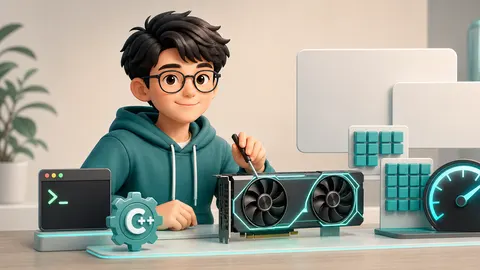
Building llama.cpp with CUDA in WSL: A Real Local Deployment Note
Artificial Intelligence · Views

Building llama.cpp with CUDA in WSL: A Real Local Deployment Note

In a WSL environment with Ubuntu 26.04 LTS and an RTX 4060 Laptop GPU, this note uses micromamba to prepare CUDA 12.4, GCC 13, and cuBLAS without modifying system directories, builds the llama.cpp CUDA backend, and compares CPU and CUDA speed with Qwen3 4B.

Local Models Are Not Toys: Putting Qwen3 and Gemma 4 Into Three Real Workflows
Artificial Intelligence · Views

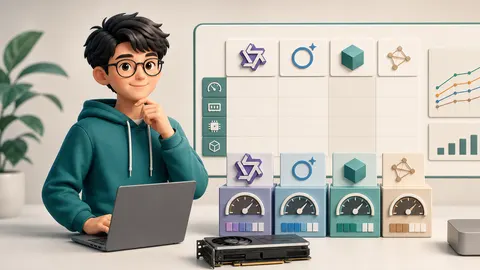
Local Models Are Not Toys: Putting Qwen3 and Gemma 4 Into Three Real Workflows

The real value of local open models is not a benchmark score, but whether they can enter tasks that happen every day. This article puts Qwen3 4B, Qwen3 8B, Gemma 4 E4B, and Gemma 4 12B into three workflows: development assistance, image understanding, and writing organization.

Installing Useful Open Models on a Local Development Machine: Choose the Runtime First
Artificial Intelligence · Views

Installing Useful Open Models on a Local Development Machine: Choose the Runtime First

A continuously updated local open-model installation note. Starting from a Windows + Ubuntu 26.04 LTS development machine with 64GB host memory, 32GB assigned to WSL, and an RTX 4060 Laptop GPU with 8GB VRAM, this article first decides whether Ollama should run on Windows or WSL, compares llama.cpp, LM Studio, vLLM, and other options, and then lists models worth keeping locally.

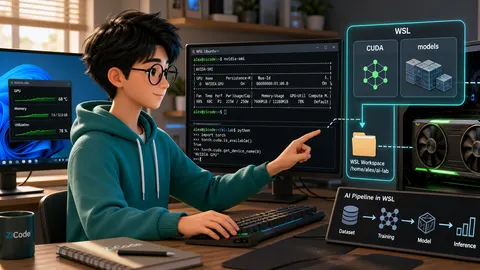
AI Development in WSL: GPU, CUDA, Model Caches, and File IO
Development Environment · Views

AI Development in WSL: GPU, CUDA, Model Caches, and File IO

Starting from a Windows development machine with an NVIDIA GPU, this article explains how to verify CUDA in WSL, run a small PyTorch test, place local model caches, and debug cases where the GPU is not actually being used.

Small Models Are Moving Back onto Devices
Artificial Intelligence · Views

Small Models Are Moving Back onto Devices

Edge AI is not a smaller copy of cloud LLMs. It is about latency, power, privacy, caching, product boundaries, and engineering constraints that live much closer to the device.